
MEDUSA
Manufacturing as a service framework decentralized secure data exchange promoting sustainability and circularity

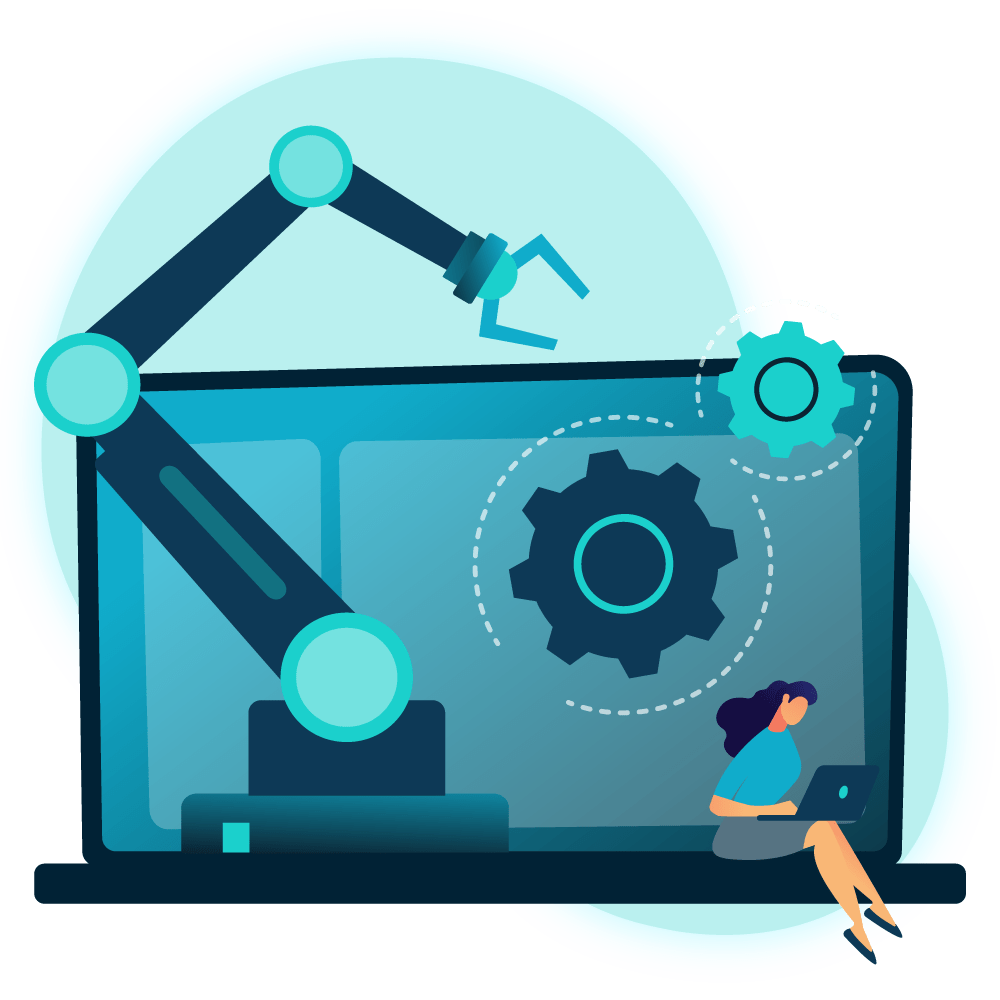
Medusa Maas
The Project
MEDUSA will consist in a comprehensive and versatile framework able to enhance cross company data exchange via trusted secured and traceable communication protocols/patterns, facilitate asset servitisation including existing B2B marketplaces from different industrial sectors and providing AI services, compliant with the AI-Act stated by the European Commission.
Discover more about the Medusa Ecosystem and its user journey below.
Medusa
Medusa Ecosystem
MEDUSA USAGE
User Journey within
the MEDUSA Framework

Registration
PRPs register via their respective marketplaces and are automatically integrated into the MEDUSA framework.
Consumers register directly on the MEDUSA platform.

Data Upload
Consumers connect to the platform and define the production chain by uploading details such as industry type, BOM, and requirements.

Plan generation
Matchmaking algorithms generate production chain plans by gathering data from connected marketplaces. The algorithm generates production chain plans based on customer requirements.

Plan selection and Agreement
Consumers select a production plan, communicate with PRPs, and finalize terms through private channels. A smart contract is executed to confirm the agreement, enabling the production process to begin as scheduled.

Production and Monitoring
Consumers and PRPs monitor the production process via the MEDUSA platform: Consumers access full production visualizations (if automated) or status updates (for outsourced production). PRPs control their specific production segments.

Post-Production Insights
Once production is complete, users access sustainability metrics such as carbon footprint and transport distances.
2024 – 2028
Timeframe
~ €6.9M
Budget
10
Countries
17
Partners
MEDUSA FRAMEWORK
Multilayer architecture
The MEDUSA framework is a unique solution in today’s marketplaces, combining IT and OT technologies. Its design is divided into two parts: IT (information) and OT (automation). These parts are supported by a layered network that spans from local devices to the cloud, distributing data processing tasks and data. The goal is to handle time-sensitive tasks on local devices, while complex computing tasks are sent to the cloud.

Manufacturing as a Service Decision Support Platform
The MEDUSA framework is a decision support platform for outsourcing manufacturing, integrating historical and real-time data from providers, AI-based algorithms, and visualization tools. It allows users to visually create production chains, define outsourcing requirements, and input necessary data for outsourced components. The platform uses low-code development, focusing on user engagement and data processing. Front-end development uses technologies like React for visualization, while back-end components include connecting to a decentralized data layer and integrating standard connectors for communication with industry-specific marketplaces.

Automation engineering platform
The Automation Layer (OT) aims to create an interface that virtualizes physical production assets to IT layer functionalities, such as decision support systems, AI-based services, and digital twins. This model, based on Open Access Foundation developments, combines OT with IT with standard protocols. The cornerstone of the model is the software-defined automation in IEC 61499. To simplify integration, each piece of equipment will be equipped with an IceBlock, a small, wireless, cost-effective nano-PLC that operates using the IEC 61499 standard.
The Edge-Cloud Computing approach will support the entire MEDUSA framework ecosystem, providing computing, storage, and networking services for various components and production assets. The Edge Platform in MEDUSA is an effective key-value-based multi-tenancy implementation, incorporating security mechanisms, access controls, governance structures, and collaborative data-sharing processes specific to manufacturing from the edge.